

Glitter, Grit, and Aqua Net: How the ’80s Pop Metal Explosion Took Over the Airwaves
If you walked down the Sunset Strip in Los Angeles or popped into a club on the East Coast in 1981, you would have encountered a musical subculture that was loud, raw, and fiercely ambitious. It was a scene built on the heavy foundations of 1970s hard rock—think Led Zeppelin’s riffs, Aerosmith’s swagger, and Kiss’s theatricality—but accelerated into something flashier and much faster.
By 1988, that underground grit had been highly polished, super-sized, and beamed into millions of living rooms via MTV. The era of "Hair Metal" or "Pop Metal" had arrived, dominating pop charts and redefining the music industry.
Here is how a gritty subculture transformed into a dominant global phenomenon.
The Twin Epicenters: Sunset Strip vs. The East Coast The heavy metal boom of the 1980s was fueled by two distinct geographic scenes, each contributing a different ingredient to the eventual pop-metal formula.
West Coast: The Sunset Strip Glitz
In Los Angeles, a mile-and-a-half stretch of Sunset Boulevard became ground zero for the visual and sonic revolution. Clubs like The Whisky a Go Go, The Roxy, and the Troubadour were packed nightly.
Bands like Mötley Crüe and Quiet Riot mixed the heavy, driving riffs of the New Wave of British Heavy Metal with a glam-rock aesthetic borrowed from David Bowie and T-Rex. L.A. metal was about hedonism, spectacle, and looking pretty while playing dangerously. When Quiet Riot’s Metal Health album hit number one on the Billboard charts in 1983—the first heavy metal album ever to do so—the music industry realized there was serious money to be made.East Coast: The Blue-Collar Grit
Simultaneously, the Tri-State area (New York, New Jersey, and Pennsylvania) was breeding its own brand of hard rock. Venues like L'Amour in Brooklyn hosted a tougher, more working-class scene.
Bands like Twisted Sister and Cinderella blended heavy blues-rock with aggressive stage personas. While the L.A. scene focused heavily on breezy California decadence, the East Coast acts often brought a street-level, theatrical defiance to their music. Eventually, a young band from New Jersey named Bon Jovi would perfectly bridge the gap, combining East Coast working-class anthems with a massive melodic pop sensibility.The Evolution of the Sound: From Hard Rock to Pop Metal
To achieve mass appeal, the music had to evolve. The early 1980s sound was aggressive and raw. However, major record labels quickly realized that to conquer the Top 40 charts, they needed to make metal radio-friendly.
This transition relied on a specific sonic blueprint:
- The Power Ballad: Producers discovered that while teenage boys bought heavy metal records for the guitar solos, a broader audience—particularly teenage girls—would buy them for emotional, slow-tempo love songs. Tracks like Poison’s "Every Rose Has Its Thorn" and Mötley Crüe's "Home Sweet Home" became mandatory additions to every album.
Polished Production: Legendary producers like Robert John "Mutt" Lange (who worked on Def Leppard's Pyromania and Hysteria) brought pop-perfection techniques to metal. They layered vocals to sound like massive stadium choirs, quantized drum beats for radio consistency, and smoothed out the jagged edges of heavy guitar distortion.
The "Hook-First" Mentality: Songwriting became highly structured, borrowing directly from traditional pop frameworks. Verses served as mere build-ups to massive, anthemic choruses designed for arena sing-alongs.
The MTV Catalyst: Visual Overload
You cannot tell the story of '80s metal without MTV. Launched in 1981, the cable network was hungry for visually striking content, and hair metal bands were more than willing to provide it.
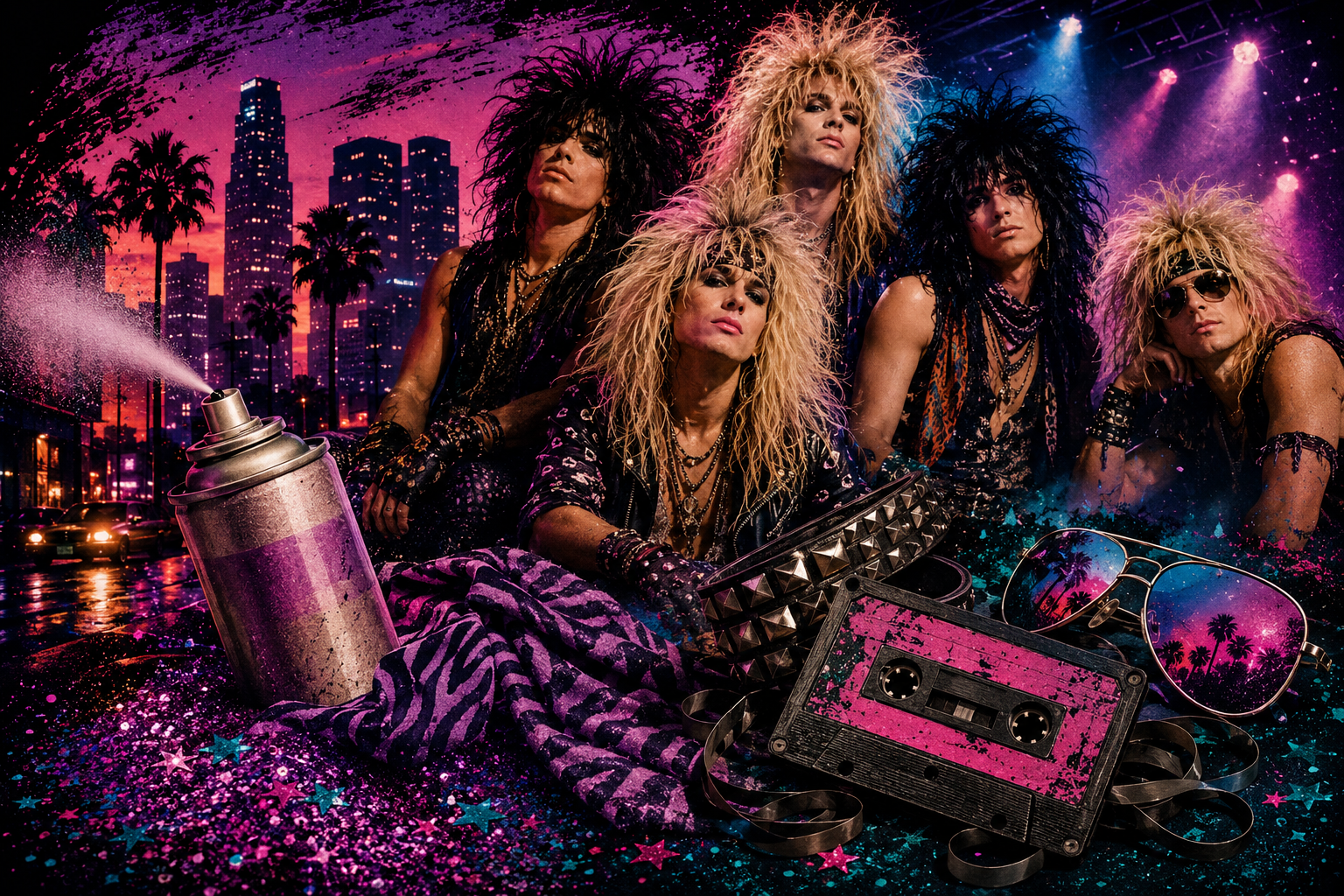
Pop metal was a genre designed for the eyes as much as the ears. The leather, spandex, heavy makeup, and towering, Aqua-Net-defying hair created an instantly recognizable brand.
MTV programs like Headbangers Ball turned bands into household names overnight. The music videos became cinematic events—often featuring massive stage productions, backstage antics, and high-energy performances that sold a lifestyle of endless youth and rebellion. By 1987 and 1988, bands like Def Leppard, Poison, Whitesnake, and Warrant were in heavy rotation, shifting millions of units and cementing the genre as the soundtrack of late-'80s youth culture.
It was a perfect storm of musical hooks, visual excess, and corporate backing that defined an entire decade before the cultural pendulum swung toward Seattle grunge in the early 1990s.
If you want to experience the days of 80s Headbanger's Ball on MTV, visit the Headbanger's Hangout music video station on vidstations.tv https://vidstations.tv/station/headbangers-hangout